Every marketing budget comes with the same core question — will this investment pay off? When your goal is to build awareness, you must understand how the available channels excel and where they work together.
While digital ads offer precision, measurability, and constant visibility, out‑of‑home advertising delivers physical presence and unavoidable reach. This comparison outlines the strengths and limitations of both options, so you can decide where your budget will have maximum impact.
1. Audience Targeting and Precision
The debate around digital marketing vs. OOH often starts with targeting capabilities. Digital advertising promises surgical precision, while OOH delivers real-world contextual relevance that digital can't replicate. Both approaches work, but they target fundamentally different dimensions of your audience's lives. The question isn't which targets better, but which approach aligns with your campaign goals.
Digital Ads Give the Power of Granularity
Digital advertising earns its reputation through targeting sophistication. You can reach users based on their browsing behavior, purchase history, demographic profile, and even life events. Platforms allow you to build lookalike audiences that mirror your best customers, then retarget website visitors with personalized messages that follow them across the internet. This level of behavioral insight gives marketers unprecedented control over who sees their ads.
Granularity makes digital unbeatable for performance campaigns targeting specific behaviors. For example, imagine you need to reach dog owners who recently searched for organic pet food and live within 10 miles of your store. A data-driven approach delivers that precision, removing guesswork from audience selection.
OOH Advertising Provides Context
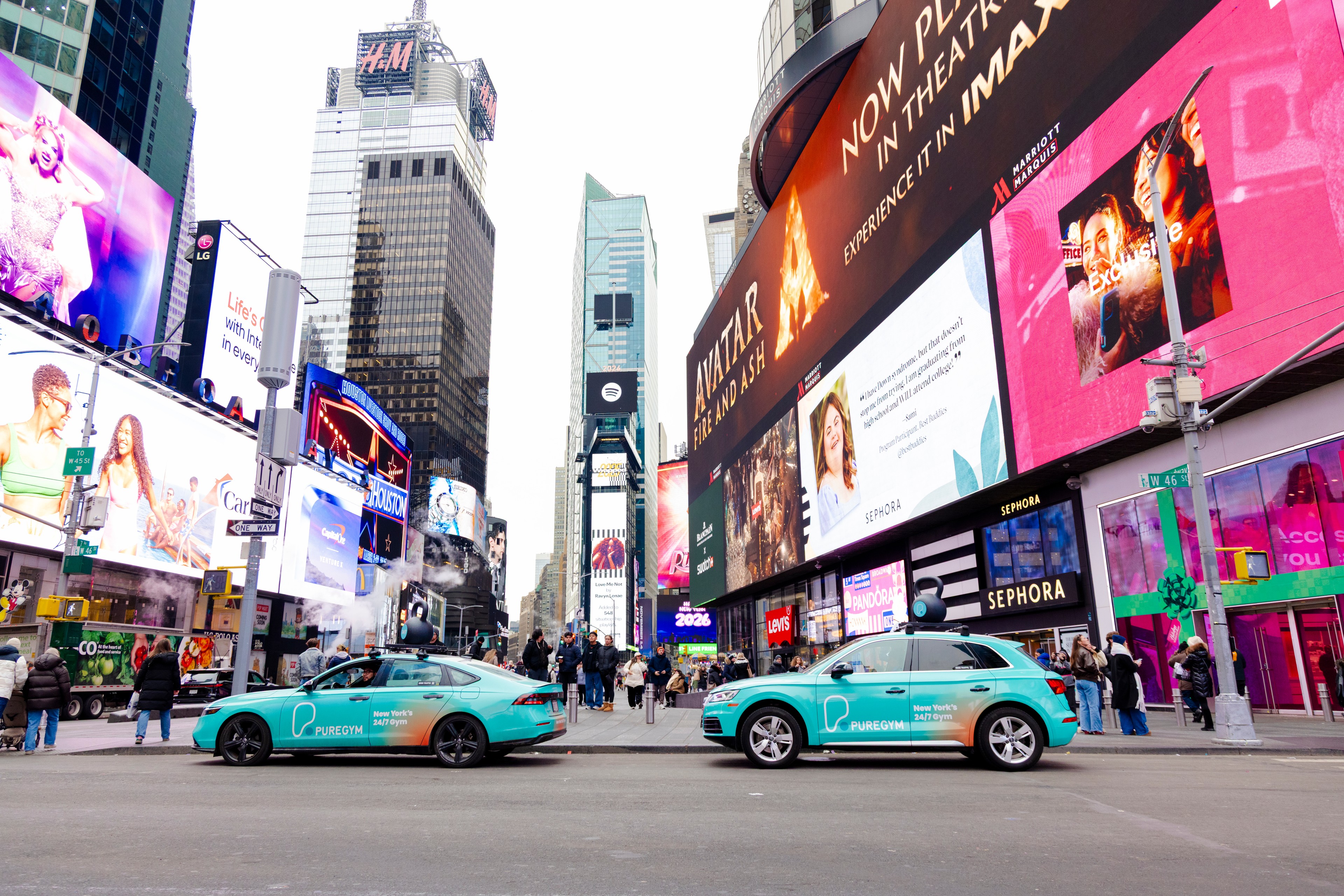
The benefits of OOH advertising emerge from a different targeting philosophy. OOH reaches people based on where they go, not what they click. A wrapped vehicle moving through a city during rush hour targets professionals in their daily environment, delivering relevance that behavioral data alone misses.
Transit OOH allows brands to dominate the high-value physical spaces where specific audiences live, work, and play. Want to reach tech workers? Saturate the commute routes around major tech campuses. Targeting healthcare decision-makers? Own the visibility around hospital districts and medical conferences. When you launch mass awareness campaigns that blanket entire cities with wrapped rideshare vehicles, you'll meet your audience in the real world, creating unmissable brand moments during their daily routines.
2. Ad Experience and Message Retention
Targeting gets your message in front of people, but ad experience determines whether they remember it. Digital ads interrupt online experiences, while OOH ads integrate into the physical environment. This fundamental difference shapes how audiences process and retain your brand message. The channel that builds lasting recall will win the awareness battle.
Digital's Challenge Is Ad Avoidance and Fatigue
Digital advertising faces a crisis of attention and trust. Consumers actively avoid it, creating a hostile environment for your marketing efforts.
Banner blindness trains users to ignore display ads. Ad fatigue sets in when audiences see the same creative repeatedly, leading them to tune out your message. The skip button becomes a reflex before your video ad loads. Every digital platform competes for shrinking attention spans in oversaturated feeds.
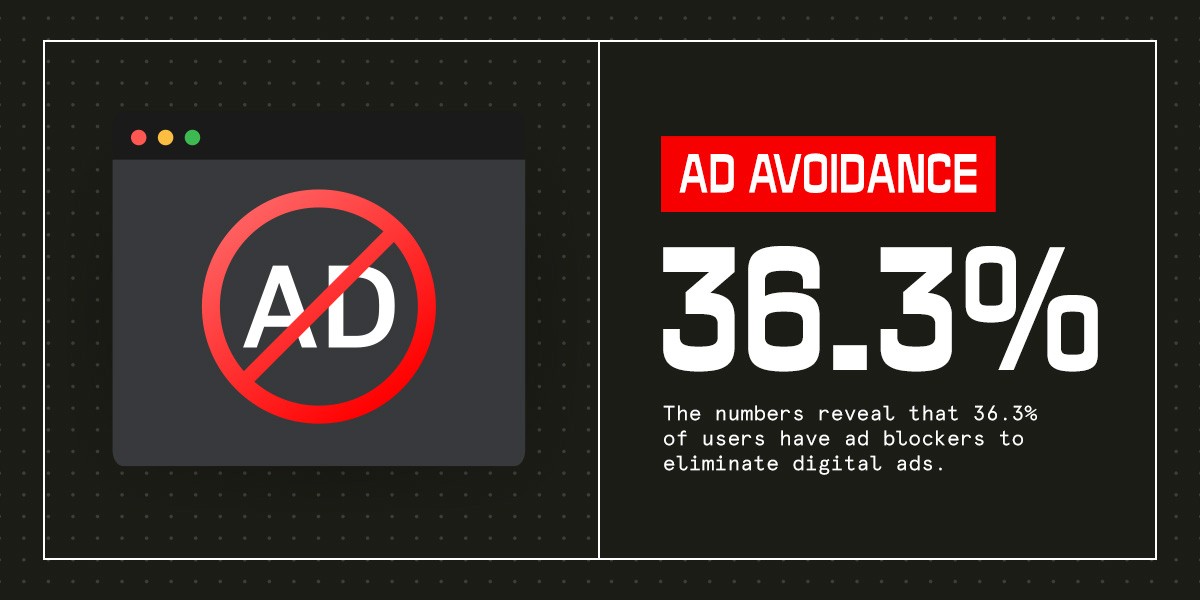
The numbers reveal that 36.3% of users have ad blockers to eliminate digital ads. Even when your ads make it through, trust in digital advertising is low, making it harder for messages to stick and influence purchase decisions later.
OOH's Advantage Is Building Recall Through Repetition
The benefits of out-of-home advertising shine brightest in message retention. OOH works through the mere-exposure effect, where repeated, passive exposure to ads builds subconscious familiarity and trust without demanding active attention. A commuter seeing your wrapped vehicle three times per week isn't clicking or scrolling, but that repeated visual presence registers and compounds over time. The integration into daily routines makes OOH memorable without triggering avoidance behaviors.
The impact of OOH frequency is dramatic. One study showed recall jumping to 56% at five exposures, demonstrating how unavoidable physical presence builds brand recognition that digital impressions can't match.
3. Measurement and Modern Attribution
The measurement debate traditionally favored digital's click-based metrics while dismissing OOH as unmeasurable. That conversation is outdated. Modern attribution tools prove the business impact of physical ads, transforming OOH from a brand play into an accountable performance channel.
Digital Is the King of Clicks
Digital advertising provides immediate, transparent metrics that track user actions from impression to conversion. Click-through rates, cost per acquisition, and conversion tracking make digital ideal for bottom-of-funnel campaigns where you need to prove direct-response results. Every interaction generates data that feeds back into optimization algorithms.
This clarity of measurement makes digital the default choice for performance marketers who live and die by attribution models. When stakeholders demand proof that marketing drives revenue, digital's dashboard delivers instant answers. The ability to track every touch point from ad view to purchase creates accountability that traditional advertising couldn't match.
Proving the Impact of Physical Ads
The advantages of out-of-home advertising now include sophisticated measurement that rivals digital's accountability. GPS data, mobile tracking, and digital integration allow brands to measure foot traffic, website visits, and conversions triggered by OOH exposure. Physical ads now come with verified impression counts, heat maps showing where your audience saw your message, and brand lift studies quantifying the impact on awareness. The technology infrastructure supporting OOH measurement continues to advance rapidly.
Modern attribution tools track the customer journey from OOH exposure to online action. Shadowfencing for digital retargeting captures mobile IDs when users encounter your wrapped vehicles and serves digital ads to those same people later, combining OOH's unavoidable visibility with digital's conversion power. OOH is no longer a vanity channel. It's a measurable growth engine delivering provable ROI.
The Verdict — Building the Right Mix for Your Brand
The wisest strategy isn't choosing between these channels — it's combining them strategically. The advantages of OOH advertising make it superior for building unavoidable, high-frequency brand recognition in target markets. Digital excels at converting that awareness into immediate action.
The market proves a layered approach works. OOH ad revenue hit an all-time high in recent years, demonstrating that savvy marketers increasingly invest in the channel to complement their digital outreach. When digital ad costs rise and organic reach shrinks, OOH delivers memorable awareness at scale, making your other marketing efforts more effective.
Frequently Asked Questions
Find answers to your questions here.
How Do Vehicle Wraps Compare to Digital Ads for Brand Visibility?
In terms of brand visibility, vehicle wraps compare to digital ads by offering real-world visibility that digital ads can't replicate. Digital ads target online behaviors, while vehicle wraps reach audiences based on where they live, work, and play.
Wraps let you engage professionals on their daily commute, for instance, or gain visibility around key event locations. This strategy builds brand recognition through repeated, passive exposure. It's about meeting your audience in their daily routines and creating a powerful brand message that resonates. Combining these approaches can enhance brand visibility to both types of audiences.
How Do You Measure the Impact of Vehicle Wrap Advertising?
You can measure the impact of vehicle wrap advertising with GPS data, mobile tracking, and digital integration to reveal foot traffic, website visits, and conversions triggered by OOH exposure. These technologies can give you verified impression counts, heat maps showing where your audience saw your messages, and brand lift studies to quantify awareness. This gives you stronger ROI visibility, turning your investment into a measurable growth engine. In fact, a recent OAAA and Kochava study shows OOH delivers strong performance outcomes, even outperforming traditional TV in driving incremental lift.
Why Is Combining Vehicle Wrap Advertising With Digital Marketing a Smart Strategy for Brands?
Combining vehicle wrap advertising and digital marketing is a smart strategy for businesses because it lets you build brand awareness from people seeing your messaging in real life and then turns that into online conversions. Vehicle wraps are good at building high-frequency awareness and recognition, making your other marketing efforts more effective.
Digital converts that awareness into immediate action. You can get the best of both worlds with this complementary strategy, as you get the unavoidable visibility and memorability of OOH with the conversion power of digital. It's convenient and innovative, maximizing your marketing budget and leading to impactful results.
Make Out-of-Home a Measurable Growth Channel
OOH is no longer a brand play you justify with a gut feeling. It's a data-driven channel that builds brand awareness, adding to the effectiveness of other channels. GOOD TRAFFIC delivers bespoke, white-glove service through wrapped rideshare vehicles moving through your target markets, combined with modern attribution tools that prove business impact. The combination of physical presence and digital measurement eliminates the traditional trade-off between brand building and accountability.
From rapid 72-hour campaign launches to scalable mass-awareness campaigns that blanket entire cities, you get a unique, customized OOH approach that makes executing your vision effortless. Gain geographic precision, unavoidable visibility, and the hard data your stakeholders demand through premium services that remove the logistical headaches traditionally associated with out-of-home advertising.
Ready to make vehicle wraps your most memorable awareness move? Advertise with us to launch a measurable OOH campaign that reaches entire cities and drives real results.
Make Out-of-Home a Measurable Growth Channel
OOH is no longer a brand play you justify with a gut feeling. It's a data-driven channel that builds brand awareness, adding to the effectiveness of other channels. GOOD TRAFFIC delivers bespoke, white-glove service through wrapped rideshare vehicles moving through your target markets, combined with modern attribution tools that prove business impact. The combination of physical presence and digital measurement eliminates the traditional trade-off between brand building and accountability.
From rapid 72-hour campaign launches to scalable mass-awareness campaigns that blanket entire cities, you get a unique, customized OOH approach that makes executing your vision effortless. Gain geographic precision, unavoidable visibility, and the hard data your stakeholders demand through premium services that remove the logistical headaches traditionally associated with out-of-home advertising.
Ready to make vehicle wraps your most memorable awareness move? Advertise with us to launch a measurable OOH campaign that reaches entire cities and drives real results.
- GOOD TRAFFIC MARKETING TEAM