Car Wrap Advertising vs. Billboards
Rideshare car wraps and billboards both reach people outside the home. A billboard stays in one place. A wrapped rideshare vehicle moves through a city all day, so the same neighborhoods see your brand again and again.
Advertise With Us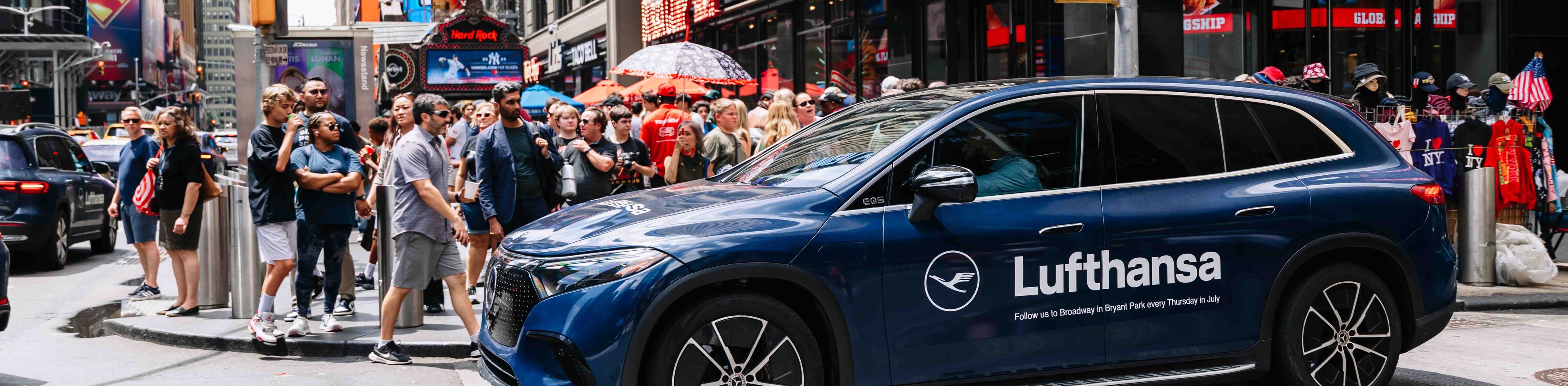
Car wraps vs. billboards at a glance
Billboards fit a brand that needs a fixed, high-profile location. Car wrap advertising on rideshare vehicles fits a brand that wants to saturate a city,
repeat its message across neighborhoods, and show up where a specific event or venue draws crowds. Many campaigns use both.
| FEATURE | RIDESHARE CAR WRAPS | BILLBOARDS |
|---|---|---|
| Movement | Moves across the city all day | Fixed to one location |
| Geography | Covers whole cities and can be concentrated on one venue or area | Reaches people who pass that one site |
| Frequency | The same audiences encounter the vehicles repeatedly across neighborhoods | Repeat exposure depends on people passing the same spot |
| Event use | BLITZ activations surround a venue during peak arrival and departure windows | Tied to the sites near the venue |
| Extras | In-vehicle video tablets, headrest QR cards, window clings, branded items | Not applicable |
When rideshare car wraps are the better fit
- You want to reach an entire city, not one location.
- You need high-frequency exposure in a specific market.
- You are timing a push around a conference, trade show, festival, product launch, or retail event.
- You need to launch quickly. Campaigns can go live within 72 hours.
- You want to engage riders inside the vehicle as well as people outside it.
When billboards are the better fit
- You want a permanent, fixed presence at one high-traffic location.
- Your goal is to own a specific site, such as a landmark or a highway corridor.
- Your creative depends on a large, fixed canvas.
Proof: Ramp in New York City
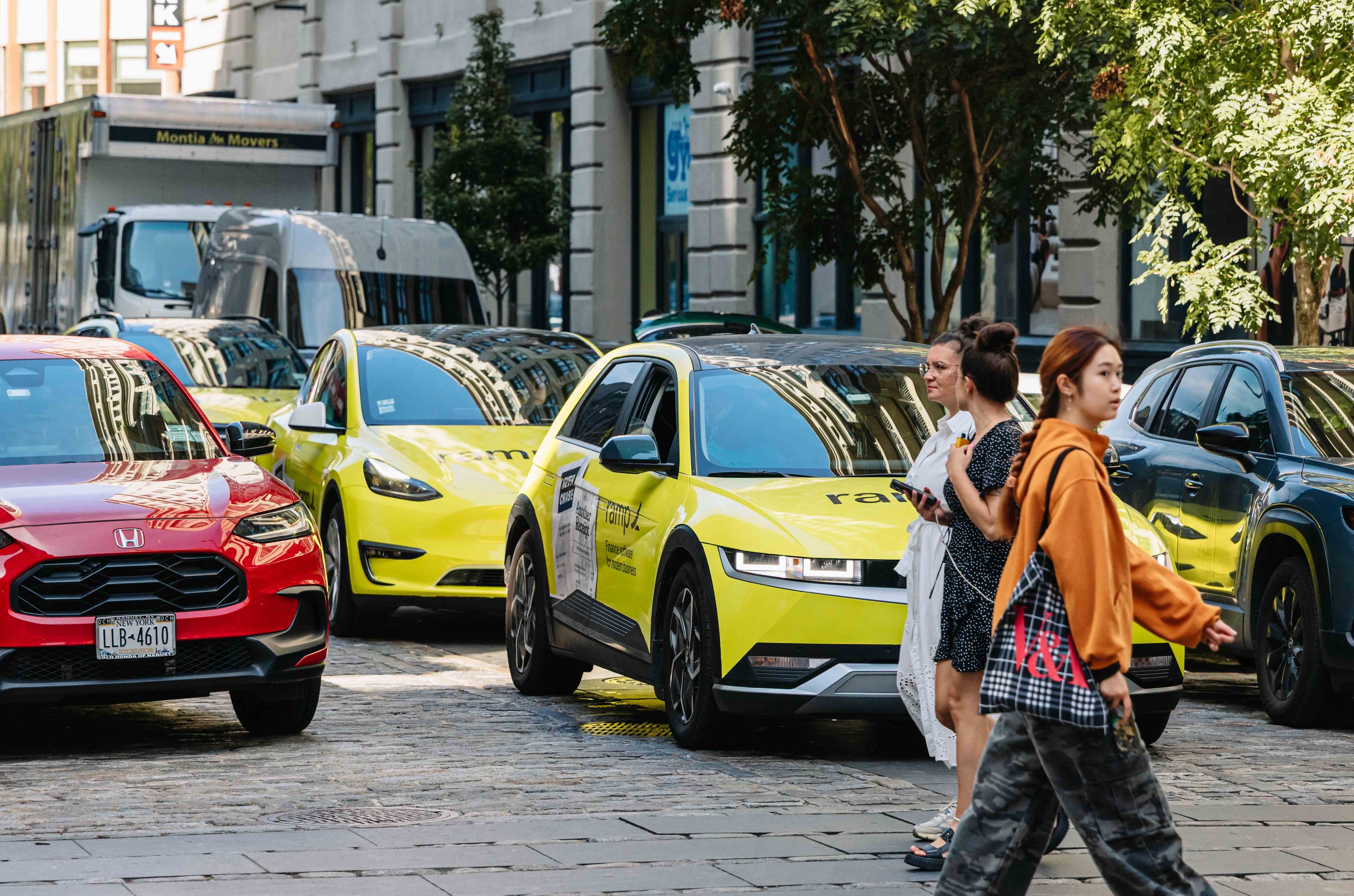
Ramp ran a 12-week, 40-vehicle car wrap campaign in New York City. It delivered 49.6 million total OOH impressions. Read the Ramp case study.
How a Good Traffic car wrap campaign works
Mass awareness campaigns. Large fleets blanket a city or metro area over weeks or months to build broad brand recognition. The average campaign runs from 4 weeks to 24 months. Learn more.
BLITZ campaigns. A concentrated, time-limited activation where wrapped vehicles converge on one location, typically 20 hours at a time. Lufthansa used four 20-hour BLITZ activations in New York City, with vehicles encircling Bryant Park to drive foot traffic to its booth. Learn more.
Full and partial wraps. A full wrap (360) covers the vehicle from roof to bumpers. A partial wrap (180) covers both sides' doors and sometimes the rear window.
Launch. After a kick-off call about your KPIs and ideas, planning and wrapping begin right away.
Frequently asked questions
How does car wrap advertising compare to billboards?
Both deliver out-of-home impressions. A billboard stays at one location. A wrapped rideshare vehicle moves through a city, so a fleet can saturate an area and repeat exposure across neighborhoods. GOOD TRAFFIC campaigns can also concentrate vehicles around a venue for events, which a fixed billboard cannot do.
Is rideshare advertising better than a billboard?
It depends on the goal. Rideshare car wraps suit city-wide awareness, frequency, and event activations. Billboards suit a fixed presence at one site. Many brands combine them.
How much does car wrap advertising cost?
Cost depends on market, fleet size, wrap type, and campaign length. Contact GOOD TRAFFIC for a custom quote.
How is car wrap advertising measured?
GOOD TRAFFIC provides heat maps, impression delivery, demographics, lift studies, and brand surveys, using a proprietary impressions methodology to provide verified OOH impressions.
How fast can a car wrap campaign launch?
Campaigns can go live within 72 hours of connecting with the team.
How long does a car wrap campaign run?
Mass awareness campaigns run from 4 weeks to 24 months. BLITZ campaigns average 1 to 7 days. Either can be extended.
Can I run a car wrap campaign in several cities at once?
Yes. Samuel Adams ran a six-city campaign across Phoenix, Charlotte, Dallas, Houston, Greenwich, and Providence.
Can a campaign target a conference or trade show?
Yes. GOOD TRAFFIC has run activations at events including Dreamforce, NRF, F1 races, city marathons, ACL, and Coachella.
Ready to start? Contact Good Traffic.
Contact Us