
Finding creative ways to reach your audience with traditional digital advertising is becoming increasingly challenging. Crafting the perfect subject line for email campaigns or developing a compelling pay-per-click campaign is no longer enough.
That’s why more brand managers and marketers are expanding their advertising strategies with Out-of-Home (OOH) advertising. Real-world platforms, such as transit and billboards, are proving effective for marketers. Revenue from OOH exceeded $9.1 billion in 2024, up approximately 4.5% from the previous year.
Learn what OOH advertising is, how to measure campaign success, and the unique benefits of transit advertising.
What Is Out-of-Home Advertising?
Typically, OOH advertising promotes products and services through outdoor media. OOH reaches audiences through everyday formats, including billboards and street furniture. Audiences notice these ads while running errands or commuting to and from work.
OOH advertising reaches approximately 90% of people in urban areas every week.
The Primary Types of OOH Advertising
OOH advertising benefits from being a versatile medium across a range of formats. These formats offer unique ways to maximize your reach.
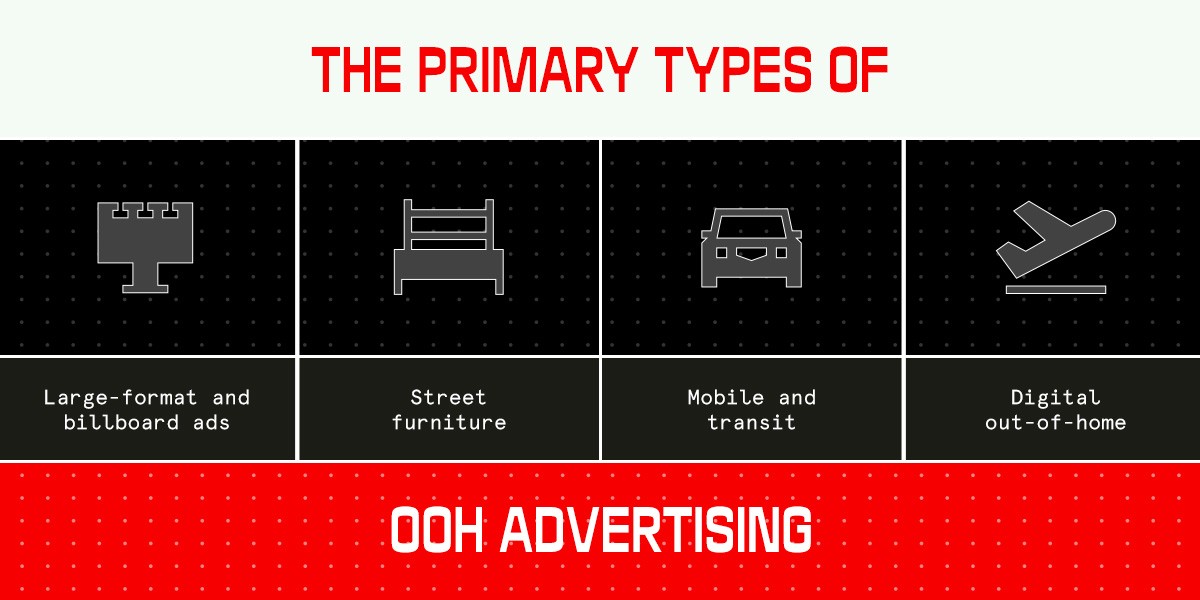
Large-format and billboard ads: For many years, large-format and billboard advertising have been a consistent presence in our cities and along highways. They catch attention based on their size and strategic placements.
Street furniture: Whether you’re waiting for a bus to work or taking a few moments to relax on a bench, you’ll likely notice OOH advertising placements. Street furniture placement allows people to pay close attention at eye level without flying past in a vehicle. Ads are especially effective in urban environments.
Mobile and transit: Mobile and vehicle advertising are powerful OOH strategies. Modes of transport may include private vehicles, public transport such as trains and buses, and rideshare services like Lyft or Uber. Constant movement raises awareness of your brand among a wider audience.
Digital Out-of-Home: Boost your advertising with a DOOH campaign to engage your audience interactively. DOOH advertising is a popular medium in environments like airports and shopping malls.
How OOH Advertising Works
OOH advertising drives engagement with a strategic approach to displaying ads where audiences are most receptive, such as the morning commute. Before developing a campaign, you should learn what OOH marketing is and how to play to its strengths.
Choose the Best Locations
Scouting locations for your OOH advertising starts with understanding your target audience. Analyze metrics for maximum reach, including traffic flow and typical demographic patterns of particular areas.
Other factors to consider include your campaign’s relevance to a location, such as distance from transportation hubs and entertainment districts. Strategic placement ensures maximum visibility.
Consistent Public Exposure
Unlike social media ads, which algorithms may filter so your intended audience never sees them, OOH advertising provides constant, memorable exposure.
For example, around 60% of U.S. adults recalled seeing OOH ads for major sporting events. As a result, 90% of these adults either watched the event, discussed it with friends, or posted about it on social media.
Select Appropriate OOH Formats
Adopting OOH advertising isn’t a one-size-fits-all approach. Start by defining your campaign goals and audience. Do you want to reach a broader demographic through billboard advertising, or aim for more targeted results with transit and street furniture OOH ads? Determine where your audience will be most likely to see your campaign, then plan accordingly.
Combining Digital and OOH Advertising
Digital and OOH advertising serve different purposes, but together, they create a powerful, full‑funnel strategy. Digital excels at precise targeting, personalized messaging, and measurable conversions, while OOH builds real‑world presence and memorable brand moments. Here's how each channel works, and why combining them can have a synergistic effect.
Visibility and ad fatigue: Ad fatigue through social media and digital platforms is a challenge. Repeating the same message will dilute its impact over time. OOH advertising broadens reach and often feels less intrusive than digital alternatives.
Reach and ad targeting: Digital advertising can target users based on data, such as audience demographics and browsing behavior. This information contributes to campaign success by enabling you to tailor your strategies to different segments. OOH advertising reaches a broader audience by targeting high-traffic areas, such as commuter transport hubs.
Balancing ad costs: Increasing competition for larger audiences drives up digital advertising spend. Digital costs, such as cost per mille (CPM), keep rising as the market becomes more crowded. OOH advertising can sustain high awareness without the need to keep increasing bids and constant algorithm optimization.
What Is an OOH Campaign Using Transit?
OOH transit advertising experienced a notable 10.6% increase in 2024, reflecting its growing popularity. Transit advertising targets a broader audience. It offers the distinct advantages of movement and diverse formats, including car wraps.
Moveable advertising: Despite the success of static OOH advertising, car wraps and other moveable formats can target specific areas around the clock. For example, car wraps grab attention in morning commutes or busy nightlife districts. Transit campaigns have the potential to generate higher conversion rates than static advertising due to their dynamic nature.
BLITZ campaigns: Promote events, products, or services for a limited time. Car wraps advertise and reach areas where your campaign is most likely to gain traction. A BLITZ campaign may last anywhere from a few days to a few months.
Mass awareness campaigns: If your goal is to raise awareness over a longer period, mass awareness campaigns improve brand recall through sustained advertising placements.
Targeting organic crowds: OOH transit advertising aligns with the natural movement of the target audience. Especially with rideshare vehicles, OOH advertising reaches vast audiences as they move through highly populated areas, such as airports, sports venues, and entertainment districts.
Can You Measure OOH Advertising Success?
While OOH campaigns do not have the same digital metrics as online ads, you can use these techniques to analyze success and plan subsequent marketing outreach.
Use mobile location data: Determine how many people saw your campaign in specific locations with mobile location data, which tracks reach and behavioral patterns.
Add QR codes: Promote user engagement by including QR codes in your OOH ads. Users who scan the codes will land wherever you direct them, so be strategic about creating a consistent experience.
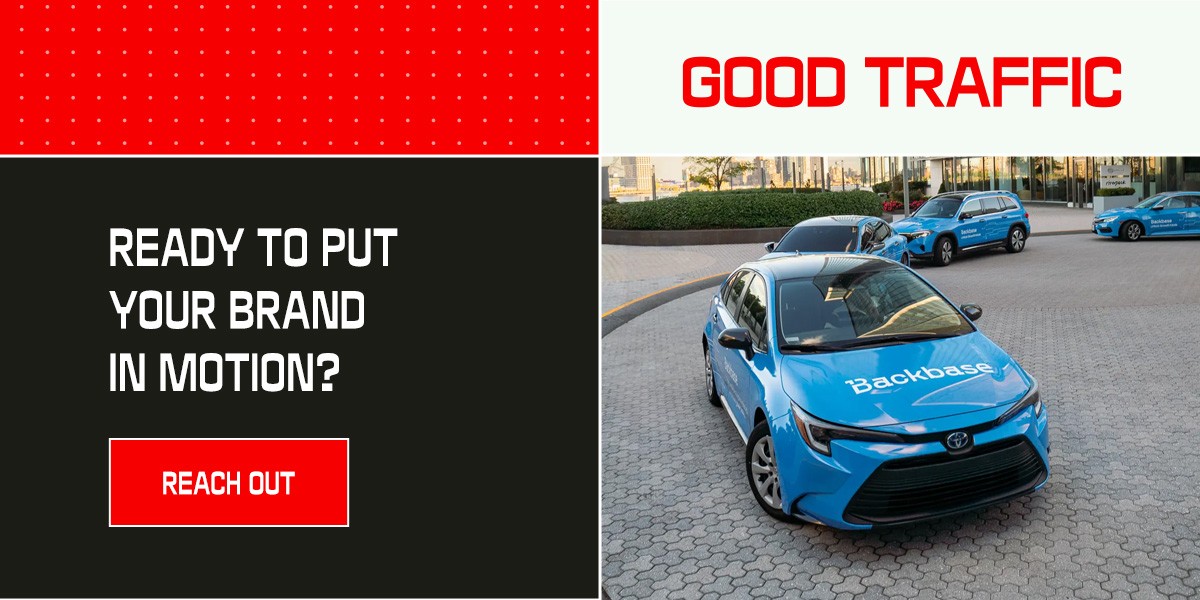
Ready to Put Your Brand in Motion?
Whether you’re planning a short-term BLITZ campaign or a mass awareness campaign, GOOD TRAFFIC delivers top results to boost your brand and generate revenue. Our team partners with leading global brands to create unforgettable campaigns that reach maximum engagement.
Let’s make your campaign dreams a reality. Start working with us by reaching out to us today.
- GOOD TRAFFIC MARKETING TEAM